Saturday, February 23, 2008

BC becomes North Cascadia?

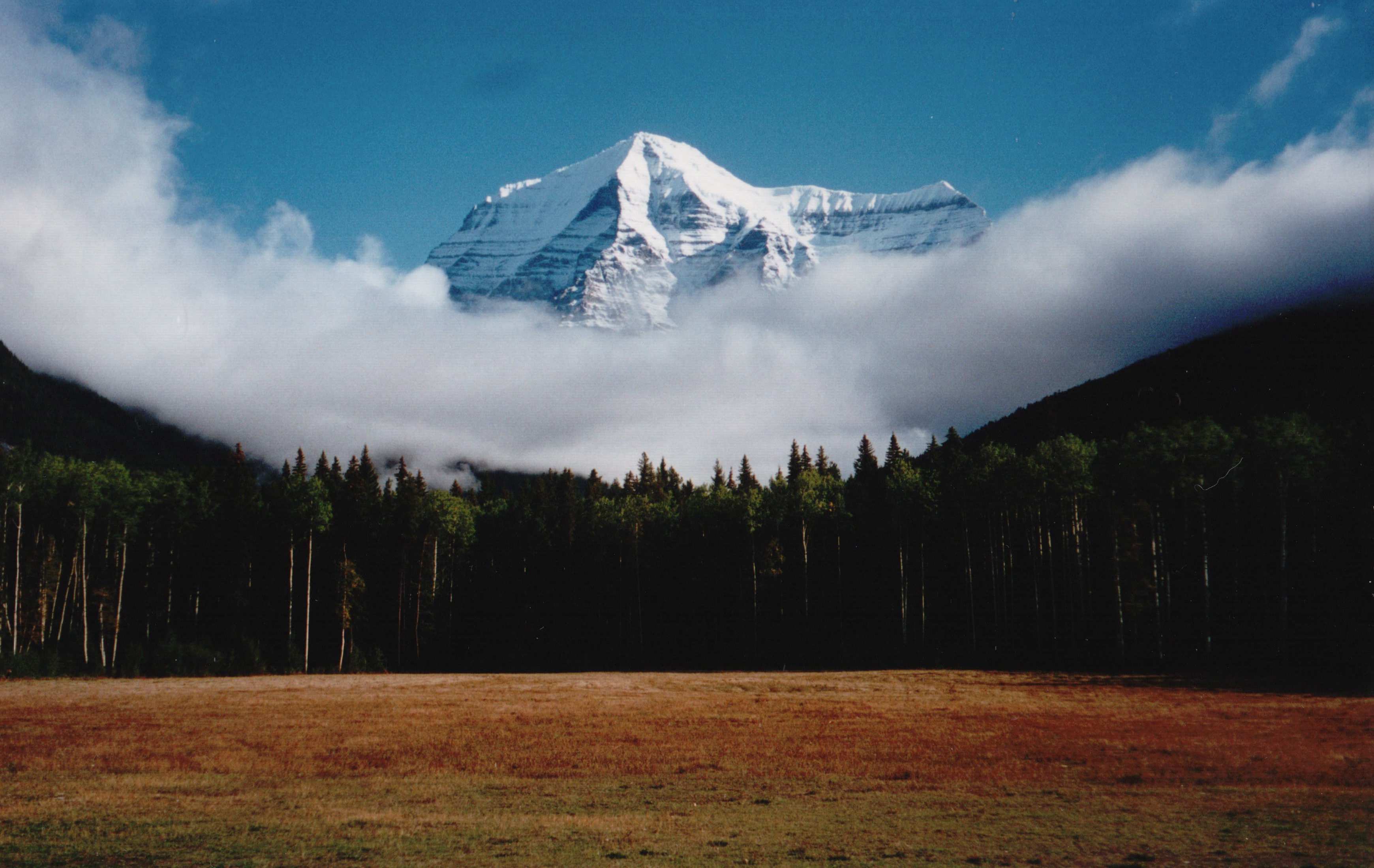
Mt. Robson in BC, courtesy of Wikipedia


So I haven't posted in a while but this was too good to pass up. The Times Colonist, a major newspaper in British Columbia, recently held a renaming contest for British Columbia. Of course, the results are merely for fun but interestingly "Cascadia" and "North Cascadia" were the most common, with "Pacifica" close behind.

Check out the full story here.

Thanks to Sightline for the find (and for naming their post Cascadia Rising).

Monday, January 28, 2008

Friday, January 25, 2008

Geothermal under the Cascades


By Les Blumenthal
McClatchy Newspapers
Jan. 24, 2008

Deep beneath the Cascades Mountains, where molten magma heats the Earth's crust and occasionally bursts through cracks and fractures in violent volcanic eruptions, lurks an energy source that scientists think could be tamed to help power the Northwest.

Though there's been little exploration, and no deep test holes have been drilled, the geothermal potential of the Cascades — which run from Washington state south through Oregon into Northern California — is starting to attract a buzz. In the next 10 or 15 years, some say, commercial-sized power plants could start generating electricity.

"As this area is predicted to contain vast geothermal resources, development plans for the Cascades are becoming an increasingly frequent topic of conversation," said a report late last year for the Department of Energy.

Behind Iceland, which gets more than 26 percent of its electricity from geothermal plants, the United States is a world leader in geothermal development, with plants pro
ducing more than 3,000 megawatts of electricity.

California is No. 1, and resources in such other Western states as Nevada, Utah, Idaho and Oregon are being developed. Nevada has been dubbed the "Saudi Arabia of geothermal."

A recent Massachusetts Institute of Technology study found that the amount of geothermal power that could be recovered from deep drilling would represent almost 3,000 times the amount of energy currently consumed in the United States.

Last year's Energy Department report said the Cascades contained "potentially significant" geothermal resources, but it cautioned that the effort to tap these resources — including drilling miles into volcanoes to tap "supercritical fluids" — won't be easy.

Even so, the hunt is under way, and some energy companies have zeroed in on certain areas.

Near Baker Lake, north of Seattle, an Oregon company is waiting for leases from the Forest Service and considering a 100-megawatt geothermal plant that could provide enough electricity for 100,000 people. The power it would produce would be cheaper than the electricity from a new natural gas-fired generating plant.

"We are very serious about this," said Steven Munson, the chief executive of Vulcan Power Co.

In the rough triangle from Mount St. Helens and Mount Adams in Washington state to Mount Hood, east of Portland, there's enough geothermal potential to develop 1,000 megawatts of electricity, the equivalent of three or four gas-fired generating plants, said Susan Petty, president of AltaRock Energy in Seattle.

The Cascades are part of the so-called "Ring of Fire" of active volcanoes and earthquake faults that surround the Pacific Ocean.

Southeastern Washington, eastern Oregon, southern Idaho, eastern California, Utah and Nevada are in a zone marked by deep fractures in the Earth's crust that tend to be pathways to the deep circulation of hot water.

Though that water is hot enough to run steam turbines, Petty and others said the temperatures of the geothermal water and hot rocks underlying the Cascades might be even better for producing power. And because magma is closer to the surface in the Cascades, the drilling holes there might not have to be as deep.

Monday, January 21, 2008

Honoring Dr. King


From HistoryLink:
On November 8, 1961, Dr. Martin Luther King Jr. (1929-1968), the great civil rights leader, arrived for his only visit to Seattle. He spoke at the University of Washington and at Temple de Hirsch on Thursday, November 9, and at Garfield High School and the Eagles Auditorium on Friday, November 10, 1961. A reception followed at Plymouth Congregational Church.

In his lectures, the civil rights leader stressed creative protest to break down racial segregation and discrimination, and called on President John F. Kennedy (1917-1963) to use the executive order to declare all segregation unconstitutional. All of his talks were inspirational and promoted the concept of brotherhood.

After the last lecture, he requested that McKinney take him to a barbecue restaurant in the Central Area where they spent several hours eating and talking and reminiscing. He left on Saturday, November 11, impressed, according to McKinney, by the progressive attitude he saw in the city, especially in the African American community.

Cascadian MLK Events:
Poetry Reading and Open Mic in Bellingham
Workshops, March and Rally in Seattle
Unity Breakfast in Tacoma
Rally and March in Spokane
March and Rally in Boise
Rosa Parks Monologue in Vancouver
Rally and March in Portland
MLK Health Care Forum in Medford
Buddhist Peace Walk in Salem
Bowl for Beans Benefit in Arcata

Thursday, January 17, 2008

Cascadian Eco-Beer

So at work today, enjoying the old Seattle Weekly, I came across Aimee Curl's article on eco-friendliness in the coffee industry. Although there weren't too many surprises (guess what, Starbucks doesn't recycle, aaah!) it's always interesting to see product comparisons with respect to greenness. Originally I thought I would just post a more generally Cascadian version of Curl's article, but then I got to thinking...

Coffee isn't the Cascadian, or even Seattle icon that so many claim it to be. Starbuck's may have started here but its popularity has little to do with coffee and much more to do with service and marketing. This is exactly why they went global and have been just as popular everywhere else. They had an effective business model that they perfected in Seattle and that's about it. Sure we like our caffiene fix everyday but were not a bunch of coffee connoisseurs who can determine the country of origin with just one whiff. In fact, if that were the case, I would expect that Starbucks would have done worse around here because people would realize that Starbucks' Grande Mocha is nothing more than the Big Mac of java.

But Beer. Now that's something that Cascadians truly take seriously. It's common knowledge that microbreweries prosper here like shrooms in a cow patty. In fact, the top five states with the most craft breweries are as follows:

1. California 200+
2. Colorado 101
3. Oregon 91
4. Washington 87
5. Michigan 69
(From Reelbeer.com)

And this is good beer too. As I mentioned in a previous post British Columbia dominated the show at the Canadian Brewing Awards. Likewise, California, Washington, and Oregon are first, third, and fifth respectively in most medals won from the American Brewer's World Beer Cup. Even in international competitions Cascadians show their talent. In the 2005 International Brewing Industry Awards the only winners from the entire North American continent all came out of Cascadia (Bridgeport Brewing, Oregon; Rogue's Brewing, Oregon; Sierra Nevada, Northern Cali; and Pacific Western, BC)

So, with inspiration from Aimee Curl and an added PNW twist, I give you the greenest beers in Cascadia!


If there was an award for greenest brew practices (which there sure as hell should be!) it would most certainly go to Anderson Valley Brewing Company. Based in Boonville, Ca, at the heart of the Emerald Triangle, this brewery is so eco-friendly I don't even know where to begin! Let's see, the company really took off in 1999 when they built their new, three-story, state-of-the-art brewhouse . They situated the building so that only one tree had to be removed, and they planted two more in its stead. The new facility boast a fully solar-powered brewing process as well as a three-pond effluent waste water treatment system. This means that water used to brew the beer is also used for heating and chilling beer, cleaning the facilities, and eventually irrigating all 30 acres of the company's property. The brewery also utilizes and supports its local community. All water used by the brewery is taken from wells on their property. The hops are all certified organic and grown in the Pacific Northwest. In addition, after using the grains for brewing they clean it, then donate it to local livestock owners. They estimate that they give away approximately 2000 tons of nutrient grains a year. These efforts have gotten them numerous awards from California's Waste Reduction Awards Program. In fact, AVBC is so environmentally conscious that they recently acquired four shire horses which they use to haul beer to local stores and pubs in the area (fed with the spent brew grains of course!).


Down in Oregon Country the Full Sail Brewing Company, based in Hood River, has gained recognition for its social responsibility. In 1999 after 12 years of brewing and 47 workers the company became an independent, employee-owned company, dividing the company between all workers. Under this ideology the company has been able to implement a number of innovative practices that have helped them reduce their environmental impact. For example, the company runs 4 10-hour work days which saves 20% on water and power consumption. 85% of hops and 95% of barley used in Full Sail Ales are grown in the Northwest and through various minor fixes they have reduced their water consumption to only 3.45 gallons of water for every gallon of beer (the industry average is between 6 and 8).


While nothing to date can compete with Anderson Valley, Olympia, Washington's Fish Brewing Company has been giving back to the environment since 2002. As their name suggests they try to promote the protection and rehabilitation of salmon habitat's throughout Cascadia. Their three main beers, amber, Pale, and IPA are all certified Organic. Their signature beer the Wild Salmon Pale Ale uses hops from a Yakima, Washington farm which was the first farm to producecomercially organic hops in the United States. A portion of the proceeds from this beer also goes towards salmon restoration and watershed protection. I also must mention the fact that all six-packs of Fish beer contain the proclamation, Brewed in the Republic ofCascadia. You gotta love that!


Of course, lets not leave BC out of this! Crannog's Ales has the dubious title of Canada's only certified organic farm brewery. Crannog's is similar to Anderson Valley, but on a smaller scale. They brew on a 10-acre farm which feeds and sustains the brewers as well as contributes to the brewing process. They also use water from their own wells and reuse grains for livestock feed. They claim to have created a harmonized, zero-waste system. While the brewery pledges to only deliver beer within driving range of the brewery this makes it difficult to secure outside of British Columbia. Nonetheless they deserve credit for standing behind their beliefs.


Juneau's Alaskan Brewing Company is also a committed green brewery. It is their goal to have a zero-net impact on the environment. To this end, in 1998 they were the first craft brewer in the country to install a carbon dioxide recovery system, which captures and reuses the greenhouse gas naturally produced in the fermentation process. Of course, they acknowledge that working in the harsh Alaskan environment they cannot be quite as eco-friendly as other places. Thus, they have pledged a portion of their proceeds to promote the health of the Pacific Ocean via their coastal CODE (Clean Oceans Depend on Everyone) Organization. The company has also recieved numerous awards for its outstanding health and saftey practices among its employees, thereby promoting healthy environments externally as well as internally.

While these five microbreweries have shown tremedous leadership in environmentally friendly beer making, their are many Cascadian craft breweries working to make their companies greener. Check out a full list of Activist Brewing Companies here.


References:

http://www.coffee.net/library/eco-conscious-green-beer.html
http://findarticles.com/p/articles/mi_m1594/is_1_13/ai_82352630
Wednesday, January 16, 2008

The State of Jefferson


Via Magazine
By Christopher Hall
September 2003

Barreling north on Interstate 5 in the late afternoon, with the Siskiyou Mountains before me slipping into shadow and lofty Mount Shasta glowing orange in my rearview mirror, I suddenly find I'm no longer in California. Not so strange, perhaps, except for one thing: Oregon still lies a good 20 miles ahead.

In a pasture just off the highway, the words STATE OF JEFFERSON appear, painted in eight-foot letters on a barn roof. A few minutes later, I pass a sign confirming that this stretch of road, traversing a 2,500-foot-high valley of hay farms and cattle ranches, is litter free thanks to the State of Jefferson Chamber. On the car radio, an announcer reminds me in his soothing baritone that I am listening to Jefferson Public Radio. Clearly, I have entered some real-life Twilight Zone called Jefferson.

A quick check of the history confirms that Alaska was the 49th state to enter the union. But if events had unfolded a bit differently, the State of Jefferson—carved from the border counties of Siskiyou, Del Norte, and Trinity in California and Curry in Oregon—might have beaten the northern giant to the punch.

Partly serious bid, partly publicity stunt run amok, the Jefferson movement spawned impassioned rallies, highway blockades by a self-appointed border patrol, and the election of a governor who posed for inauguration day photos with a bear named Itchy.

Today in these counties it's unlikely that you'll encounter serious secession sentiment, or even a tame bear. You won't be stopped by the border patrol—only by natural wonders like the rushing jade waters of the Smith, the last major undammed river in California. During my four-day drive through modern Jefferson, I pulled my car over plenty of times. I gawked at soaring bald eagles. I stood in awe before an army of insect-eating, cobra-headed California pitcher plants rising from a misty forest floor. I felt the spray of water where rivers meet ocean surf, and I ate salmon within view of the boat that caught it only hours earlier. And all along the way, I learned about this almost-state that was born in a small Oregon town.

With its peaceful, slightly funky feel, Port Orford, Ore., hardly seems a cradle of revolution, but in 1941 it had Gilbert Gable at the helm. Gable described himself as the "hick mayor of the westernmost city of the United States" when he met Stanton Delaplane, the San Francisco Chronicle reporter who penned a series of Pulitzer Prize-winning stories about the Jefferson movement. Gable was actually a transplanted Philadelphia public relations man who had headed west with a wad of dough and big plans for extracting the region's timber and ore and for transforming his sleepy new hometown into a bustling seaport. One of the things that stood in his way was bad roads, many of which were no more than oiled dirt lanes that turned to sludge in rain and snow.

Perhaps hoping to get a good new road or two, Gable announced in October 1941 that Curry, Josephine, Jackson, and Klamath counties in Oregon might merge with California's Del Norte, Siskiyou, and Modoc counties to form a new state. "It was more publicity stunt than serious secession movement at that point," says Jim Rock, historian and Jefferson expert. "After all, under the U.S. Constitution, they had to get the approval of Congress as well as the legislatures of both states."

Port Orford today has a small fishing fleet and an unusual open-water port, where boats are hoisted out of the ocean rather than tied to a dock. The population is a mix of fishermen, old-time lumbermen and ranchers, and newly arrived retirees. A good number of artists live and work in the area, selling pieces at galleries and gift shops like Port Orford Pottery, which is open "most days" from April to October, "unless the fish are biting."

Drive slowly through town or walk the bluffs in Port Orford Heads State Park to take in the stunning views up and down the coast and you'll see that booming development, as Gable envisioned it, never came. "We get visitors throughout the year, but mostly in the summer," says current Port Orford mayor Gary Doran, who is as low-key as Gable was hard charging.

Visitors come to stroll along sandy Battle Rock Beach, the site of a fierce 1851 fight between pioneers and Rogue Indians, or to explore Rocky Point tide pools that brim with flowerlike anemones and deep purple and bright orange starfish.

Humbug Mountain State Park attracts scuba divers and windsurfers, as well as those who are up to the challenge of a hike through old-growth forest to the mountain's 1,756-foot ocean-side summit.


Full story here.

Learn more about this little rebel state at www.jeffersonstate.com