Wednesday, May 28, 2008

Seattle's Neglected Past

The picture above is of the Historic Hotel Seattle. Built in 1890, directly after the Great Fire, the triangular-shaped building stood in the heart of Pioneer Square until 1961. In that year the hotel, possibly the oldest building in Seattle, was razed for a parking garage in the name of Urban Renewal.

Now, I don't want to dwell in the past here, and I will acknowledge that, in fact, the demolition of the Hotel Seattle did have its benefits. It initiated the development of the Pioneer Square Historic District. It also, arguably, helped motivate Victor Stienbrueck and others to stand up against a simlar "urban renewal" of the Pike Place Market, now Seattle's biggest tourist attraction. In addition, the constructed parking lot is probably as close to architectural beauty as you can get with a resting place for cars. It even has a nickname, The Sinking Ship.


What I do want to quibble over is the poor state of Pioneer State today. In the past half-century Pioneer Square seems to have remained stagnant as the rest of Seattle has bustled on. It is as if the Historic designation of the area has utterly baffled developers and property owners, who would rather leave the land as is and look to less permanent neighborhood properties for their far flung ambitions (ie. Belltown, Cascade).

Take, for example, Occidental Park.

Looking West this is probably one of the most beautiful areas of the city. The ivy-infested brick building hints at a classic European city, while the native Totem Poles to the left prominently say Cascadia.

But facing East the picture is starkly contrasted. The noses of parked cars creep uncomfortably close to the pedestrian's space and the uninspired buildings have their backs turned, as if the street, rather than the Park, is a better place to attract clientele (and unfortunately this is quite possible).


Why has nobody had the adventurous desire to take advantage of this amazing spot, to seamlessly integrate the square with the rest of the space? Perhaps adding some arched brick structures while removing the cars, refacing shops and cafes to pour out onto an extended square, and renovating or adding loft apartments, with balconies peering down into the contained activity.

This same problem of neglected beautfy typifies most of the Historic Pioneer Square District. While appointment-oriented art galleries and game-day pubs have flourished with cheap rents, fine dining restaurants and luxury condos are rare to say the least. With a lack of solid pedestrian traffic the soft red-brick streets and plazas are only utilized by the homeless and others, too busy looking out for the law to enjoy the charm underfoot.

Perhaps the relative infancy of Seattle has given rise to a set of architects who have only learned to create something out of nothing. Perhaps these developers have never been taught the prudence of working within limits. Whatever the case may be, as we Seattlites continue to cry fowl against sprawl and the creation of new suburban communities it may help us to look back into the heart of our oldest neighborhood and challenge ourselves to provoke a true Urban Renewal.

Saturday, April 26, 2008


The history of Cascadia, (then known as Oregon Country) reveals a very ambiguous power structure. As one of the vestiges of the frontier, men (and women) made the long journey to the Pacific Northwest as a way to escape established institutions and try their hand and a better (and wetter!) life. For many years the lucrative Hudson's Bay Company acted as a proxy government for the Cascadian people, of which the vast majority were employed under. The governments of both Britain and the US had agreed to share the land, essentially seeing it as nothing more than an exploitable resource base for their affluent Eastern cities. But as the population grew, and in turn, diversified, Cascadians realized that a structure of governance was necessary. A series of meetings were held in Champoeg, Oregon (halfway between Salem and Oregon City), which culminated in the establishment of the first government of Cascadia.

On May 2, 1843, in the bustling prairie town of Champoeg, prominent settlers of Oregon Country debated about how to establish law. Finally, a line was drawn on the ground. All those in favor of establishing an independent government were asked to cross the line. The vote was close, 52-50 but the settlers decided on a new government. Thus, the First Provisional Government of Oregon was established. The government existed for almost six full years, providing a legal system as well as a common defense for the Cascadian pioneers. On March 3, 1849 the government was absolved as the Oregon Territory was established under the United States Government. Nonetheless, Cascadians did in fact rule themselves before anyone else got the chance.

To commemorate this historic event the Cascadian Commons is hosting a Founder's Day Event in Champoeg State Park. Although the town of Champoeg no longer exists due to a devastating flood, a marker has been laid down to mark the place of the Champoeg meetings. The Cascadian Commons intends to reenact the line in the ground and ask all who believe in an independent Cascadian Government to cross it. Find out more information at their website: CascadiaCommons.org

Friday, April 18, 2008

Still More Car Freeness

Apparently Cascadians have taken Peter Newman's advice to heart. In a new report released by the Sightline Institute, the combined states of Washington, Oregon, and Idaho have decreased per capita gas consumption in seven of the last eight years. This means we are now using less gas per capita than at any time since 1966.

Of course, the news isn't all good. Increases in population almost directly offset the amount of gas that individuals are consuming, meaning that total gas consumption has pretty much remained flat since 1997.

Nonetheless in less than a decade per capita consumption has declined by a whopping 11 percent, making it the fastest reducing region in the nation. In fact, in the mid '90s Cascadia was one of the most gas guzzling areas of the country, but now we are at about 9 percent less than the national average.

As more people step out of their cars its our job to make sure that development and infrastructure promotes non-car use. Without some major investments in land management and public transportation we will see a major gentrification of our cities. The lower class will be pushed out of the urban and into the suburban; places that were built to to escape the poor in the first place! Oh the irony. The days of huge highways and suburban sprawl are over. Let us usher in a new era of public funding that is directed at healthy, livable communities for everyone.

Get Involved:
Seattle Great City Initiative
Bicycle Transportation Alliance (Portland)
Carfree Portland
Smart Growth BC

Friday, April 11, 2008

Car Free Cascadia!

Portland's Pioneer Courthouse Square, courtesy of Wikipedia

The Oregonian published this great interview with Australian Professor, Peter Newman. He studies what he has dubbed, "car culture" in America and Australia. Here are a few excerpts:

Q: We have a $4 billion proposal to replace a six-lane highway bridge on Interstate 5 with a new bridge that would have six highway lanes, plus six auxiliary lanes. It would also extend light rail to the northern suburbs and have generous pedestrian facilities. It's been billed as having a little bit for everyone. Is that kind of project worth pursuing?

A: Four billion dollars is what you're going to need for building these transit lines and subcenters.

Keeping the traffic moving is what you have to stop doing. VMT (vehicle miles traveled) reductions are not going to be promoted by that bridge.

There will be a whole series of freeways taken down when they reach the end of thei life in cities around the world. The one in Seoul (South Korea) came down. Now it's a beautiful river, and a park with transit. The mayor who did it is now the president.

Q:What's the difference between a sustainable city and your latest term, a resilient city?

It's moving more directly into this climate change and oil agenda. In many ways, the sustainability word is being made to mean "green." But the agenda of oil and greenhouse gases -- the consumption of resources -- is about resilience in the city.

Resilience means you can have options so that we can achieve a 50 percent reduction in VMT, so that we've got capacity in the transit system, you've got destinations clos by that you can reach biking and walking, and if you need to use a car you don't need to go far.

Suburbs on the fringe built with all the certainty of the future are now very uncertain, because people living there sometimes have to spend 40 percent of their household budget on transport, and 40 percent is not sustainable.

If you're going from $3.50 a gallon gas to $6 a gallon, which is the price of fuel in Europe ... many of these suburbs will be abandoned. They are not resilient.

Q:Every month or so, another magazine names Portland the most sustainable city in America. They tend to cite the renewable energy we use, the commuters who don't drive to work and the number of green buildings. What should the next challenge be for us?

On those sustainability ratings, it comes out on top, and I would agree with that. But on a resilience rating, it's not. New York comes out on top.

There are whole regions of New York that are just as bad as Atlanta. But the core of Manhattan is very resilient. It's got enormous ability to take people other than by car.

Portland now needs to lead the way in the exponential decline in VMT, and there can be no complacency anymore in saying, "Well, we're already there."


Check out the whole interview with some videos here.

Sunday, February 24, 2008

Cascadian Drinking Song

Blue Moon Tavern in Seattle, courtsey of Wikipedia.


Here's a short Drinking Song I came up with while bored at work the other day. There's no real tune for it yet. If anyone has any ideas, suggestions, or additions let me know.


From the Emerald City to Bridgetown down South
An Ode to Cascadia I sing from my mouth.

With it's mountains so mighty and its trees oh so tall,
We drink to Cascadia 'cause it's got it all.

Cheers! to Cascadia with all of it's green,
Where the women like it dirty and the waters are clean.

Cheers! to Cascadia let the rain fall outside,
We'll dance in the puddles while the foreigners hide.

We've got breweries a plenty, the best pot around,
and Autumn brings magical fruit from the ground.

In winter the snow piles high on the peaks,
and long summer nights let us stay out and drink!

Cheers! to Cascadia with all of it's green,
Where the women like it dirty and the waters are clean.

Cheers! to Cascadia let the rain fall outside,
We'll dance in the puddles while the foreigners hide.

We pour,
One for the Salmon who's homes all got dammed,
by greedy capitalists here in this land.

But now we have wisdom, we've learned from the past,
We must work with nature to make this land last.

Cheers! to Cascadia with all of it's green,
Where the women like it dirty and the waters are clean.

Cheers! to Cascadia let the rain fall outside,
We'll dance in the puddles while the foreigners hide.

Saturday, February 23, 2008

BC becomes North Cascadia?

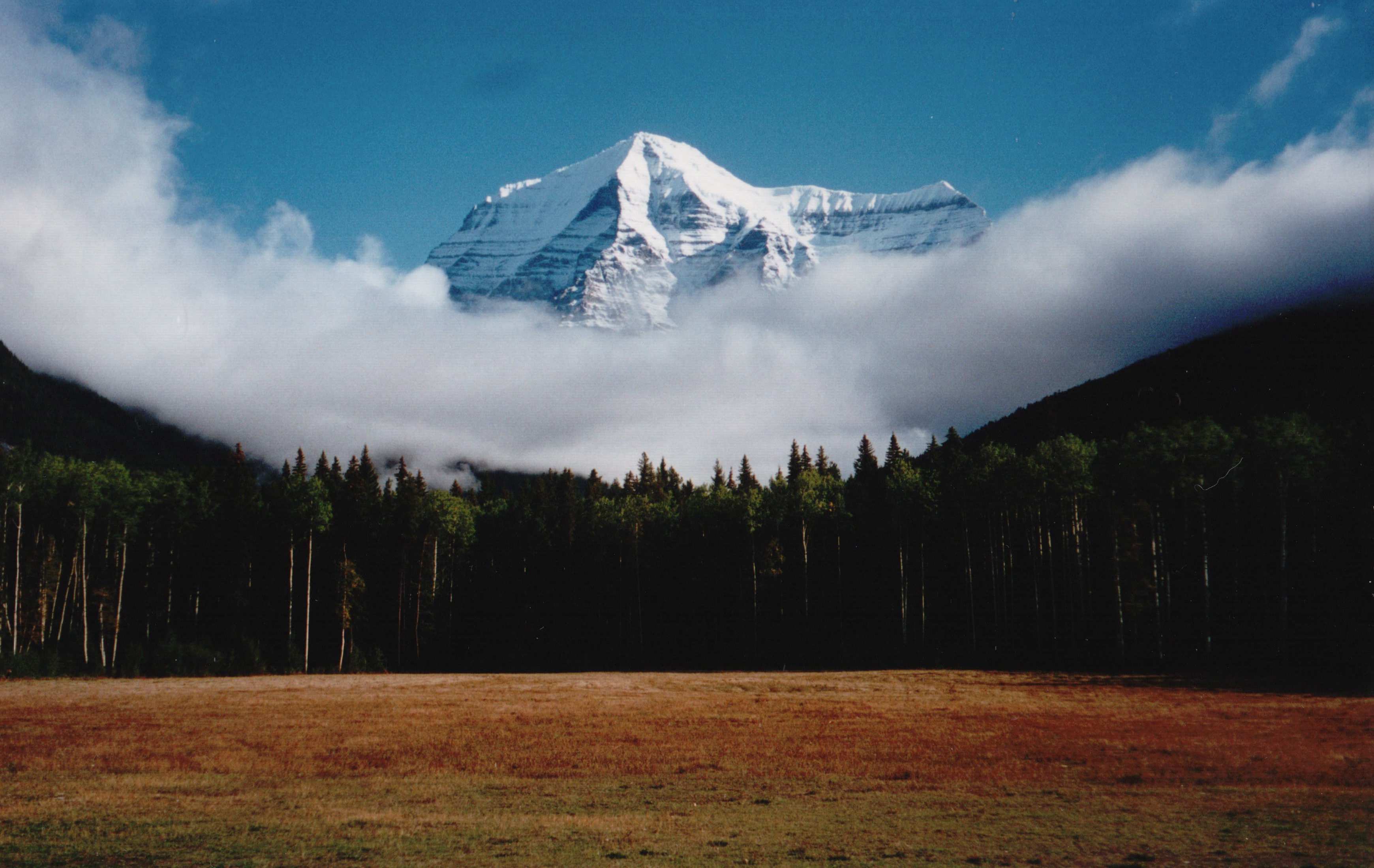
Mt. Robson in BC, courtesy of Wikipedia


So I haven't posted in a while but this was too good to pass up. The Times Colonist, a major newspaper in British Columbia, recently held a renaming contest for British Columbia. Of course, the results are merely for fun but interestingly "Cascadia" and "North Cascadia" were the most common, with "Pacifica" close behind.

Check out the full story here.

Thanks to Sightline for the find (and for naming their post Cascadia Rising).