Showing posts with label urban issues. Show all posts

Wednesday, July 2, 2008

Seattle Staircases


Seattle is certainly a city of hills. Local lore would have it that Seattle, like Rome, was built on seven hills, but as the city spread outward, many more were encompassed. In fact, outside of San Francisco, Seattle may be the hilliest city in the United States. Seattle's relatively recent growth put technology on the side of development and allowed urbanity to essentially disregard the area's topographical variation.

And yet, although it certainly doesn't feel like it, there was a time in Seattle's past when getting up and down these hills involved more effort than simply pressing harder on the gas peddle. The Queen Anne Counterbalance is probably Seattle's most famous mode of ascencion, but a much older and simpler mode, was the staircase. Just like, streets, lamps, waterpipes, and electricity, stairways were, for many years, part and parcel of the city's infrastructure. In some of the cities steepest areas, steps have been a necessary part of transportation.

Sadly, as car culture has consumed us, Seattle stairways have been neglected and underused and money towards continued building, or even improvement, has been altogether diverted. Nonetheless these wonderful pieces of construction still remain hidden away in every neighborhood of the city, each has it's own distinct feel and character.

And so, in an effort to revive the love of these foot-friendly passages, I give you a photographic Ode to the Seattle Staircase. Enjoy!

[ Mount Baker]


[ Horton Hill]


[Beacon Hill]


[Upper Queen Anne W.]


[Montlake]


[Golden Gardens]


[Upper Queen Anne N.]

Thursday, June 19, 2008

The Question of Urbanity

[5th and Madison]

I recently finished reading The Life and Death of Great American Cities. This monumental work, written by the Urbanist Jane Jacobs in 1961, is an informative, and almost poetic read. If you haven't read it, do! Here are a few exerpts in the meantime:
  • "So many people want to make use of [successful city areas], so many people want to work in them or live in them or visit in them, that municipal self-destruction ensues. In killing successful diversity combinations with money, we are employing perhaps our nearest equivalent to killing with kindness."
  • "Life attracts life."
  • "To approach a city, or even a city neighborhood, as if it were a larger architectural problem, capable of being given order by converting it into a disciplined work of art, is to make the mistake of attempting to substitute art for life."
  • "Big-city government today is nothing more than little-city government which has been stretched and adapted in quite conservative fashion to handle bigger jobs. This has had strange results, and ultimately destructive results, because big cities pose operational problems that are innately different from those posed by little cities."
  • "Attrition of automobiles by cities is probably the only realistic means by which a better public transportation can be stimulated, and greater intensity and vitality of city use be simultaneously fostered and accommodated."
The fact that she argued so vehemently for the minimization of automobiles in 1961 is true evidence of here contemporary relevance.

Nonetheless, while her goal of a healthy, livable city (opposed to a town or village) still survives today, the obstacles and challenges are much different now then at mid-century. Preeminently is the debate of a sustainable planet. The issues of global climate change, dwindling resources, and overpopulation were not nearly as dire in Jacobs' days as they are in our contemporary world. With these problems in mind it is not only necessary to make cities livable, but also to minimize their impact on the global environment.

The dominant theme in Cascadia today is that density = sustainability. There are many obvious benefits from a more compact urban environment, specifically the increase in walkability and effective mass transit, thereby minimizing carbon emissions. But I think these arguments tend to miss a greater, and perhaps more important issue. Derrick Jensen, in his recent book, Endgame, points out the problem nicely:

"The story of any civilization is the story of the rise of city-states, which means it is the story of the funneling of resources toward these centers (in order to sustain them and cause them to grow), which means it is the story of an increasing region of unsustainability surrounded by an increasingly exploited countryside."


Jensen's point brings up a frightening question: Could it be true that cities themselves are inherently unsustainable? My soft spot for cities makes me answer, optimistically, no. But, at the same time, I know we are going to have to wholly redefine the way we visualize urbanity if we intend to save this planet. In any case, this daunting question is something I intend to explore constantly in posts to come.

Thursday, June 12, 2008

Historic Preservation

[Lusty Lady at 1st and University]

A few days ago, Knute Berger, a proud and longtime Cascadian who writes for Crosscut, wrote an article criticizing the green movement in Seattle. The article, entitled Unsustainable Seattle, argues that construction in the name of density or sustainability is simply cloaked consumerism, while historic preservation is the true key to limiting our energy consumption. Unfortunately Berger uses limited contemporary facts and his biases stick out like a Sasquatch in Seattle. But deeper down I think he does raise some valid points, however poorly communicated.

His main argument revolves around his criticism that the energy costs in constructing new buildings is far greater than saving already existing ones. Siting a talk given by Donovan D. Rypkema, a D.C.-based economic development consultant, he points out that old buildings were usually built with "brick, plaster, concrete, and timber" which are much less energy consumptive that contemporary building materials, generally, "plastic, steel, vinyl, and aluminum". Further, he points out that when tearing down a building, we not only waste all the material, but also the "embodied energy", or the original energy used to construct the building. Near the end he deounces "greens" for not fully supporting preservation by quoting Rypkema:
"When you rehabilitate a historic building, you are reducing waste generation. When you reuse a historic building, you are increasing recycling. In fact, historic preservation is the ultimate in recycling. At most perhaps 10% of what the environmental movement does advances the cause of historic preservation. But 100% of what the preservation movement does advances the cause of the environment."
Now, while Berger is right in saying that preserving existing structures is an energy-effective building method, his argument isn't completely coherent. First of all, criticizing the materials used in new construction is not an argument against new construction, it is an argument against how new construction is done. The best ways to build are constantly argued and discussed within the "green" circles and certainly many would argue that a return to better, stronger, less energy -intensive materials is a must. Second, materials can easily be reused and yet still be reconstructed into an entirely new building. Rollins Street Flats, in South Lake Union boasts 81% recycled materials. Similarly, the Sabey pain-stakingly donated tons of bricks to the community when it demolished the original Rainer Brewery Storage Facility.

[Rendering of the Ice House at Airport Way and Nebraska]

Berger also fails to account for renovation and restoration work needed for historic preservation. These buildings are old. Wood frames can rot and need replacing, stairwells and improved water systems might need to be added. Oftentimes, entire interiors are gutted and replaced with an new floorplans. These types of things certainly take some energy consumption. It is probably less than constructing new buildings but in no way carbon neutral.

But no matter how energy intesive new building may be, the fact is that Seattle is a sprawl city and without major redesigning the city itself will be unsustainable. There is only so much you can do with a single family home, the structure that makes up nearly 70% of the city's area. Berger blasts Sound Transit for destroying, "a slew of wonderful old Capitol Hill apartments". But what does he expect? Should we abandon any thoughts of a real mass transit system in the name of preserving a few apartment complexes? Truth be told, Seattle is a young city and even our oldest buildings are infants in the eyes of the world.

These arguments are so poor because Berger's real reasons for criticism are entirely different. The fact is that Berger can't come to grips with the fact that the 50's style suburban neighbors of the past are not going to be staying around much longer. He laments that current construction will "transform the city beyond all recognition". This statement is absurd. Cities are constantly changing and growing, just like the people that make up their populations. It is irrational to wish for a stagnant, unchanging Seattle cityscape. But, as unreasonable as this idea may be, it is statements like this that are truly detrimental:
"Pioneer Square and the International District will be squeezed by encroaching high-rises. And residential neighborhoods are feeling pressures from a building boom enabled by city policies allowing taller, denser, and faster-track development."
It is exactly this time of mentality that will prevent Seattle from becoming a progressive, sustainable city in the future. Pioneer Square and the International District are the two most historically preserved areas in the entire city, and this will not change. But without new development in the area these neighborhoods are doomed to remain underutilized and underpopulated. As I mentioned before, single family neighborhoods are abundant in Seattle and these relics of a car-centric past are the dominant obstacle in our efforts towards sustainability. As Berger says, "greens and preservationists need to be allied" and for this to happen he is going to have to acknowledge the problem with a single-family city.

[Sodo Park at 1st and Hanford]

But aside from Berger's personal reasons for preservation there is a valid argument to be made here. Adaptive use and preservation do need to be a major part of future construction. Adapting a new development to the existing buildings can foster a much greater amount of creativity compared to the cookie-cutter designs that are constantly being thrown together. For example, as North Aurora becomes less of a highway and more of a city it should embrace it's road-side past. Many of the hotels and motels can be converted into affordable housing or SRO's, things that are in dire need in this city. Similarly the Duwamish Valley's industrial past has provided a slew of large, warehouse like buildings. These can be utilized in many different ways giving the neighborhood a distinct flavor and character while maintaining a structural record of its manufacturing history. Sodo Park, used by Herban Feast is a fantastic example of this type of adaptation.

What we need to do, and what has already been done in other Cascadian cities such as Vancouver and Portland, is leverage historic preservation through height and density incentives. Currently Seattle has an incentive program that allows developers extra height in return for public amenities. This means that the developer writes a check to the city of which 60% goes towards future affordable housing (not necessarily near the development) and 40% goes towards "the community", a vague concept that generally never materializes in much more than a better landscaped sidewalk and a few more benches. What we need is a "menu options" program which includes very specific ideas such as: community center, park space, historic preservation, environmentally friendly building, etc. Frequently a number of these options can be combined in creative ways allowing a much more colorful city. Such a system was used to develop Portland's Pearl District and the result is internationally praised.

I am excited to watch Seattle mature in my lifetime. A denser, taller city, with better transportation is certainly the goal of our generation. But in our efforts to accomplish these aims it is important to be prudent and creative to ensure a city that is not only more sustainable, but beautiful and unique as well.


Wednesday, June 11, 2008

Joe Metro


"Take six quarters out of the pocket
And drop it in the box, hop the 48.
Off to pay homage.
It stops often.
I jot my
observations,
watchin' citizens walkin' off the Joe Metropolitan.

Proletariats and wayward sons,
With old Filipino men speakin' in they native tongue.
And the day is just begun
Greeted by the smell of a bum,
smelling something like beer, bar, and dung.

A brother in repose in the back,
All alone
Marinatin' in a pair of half-broken headphones.
Muddled in Rhymes...


...The Northwest fills my lungs, kills the pain in my chest."

-Joe Metro, Blue Scholars

Monday, June 2, 2008

Seattle Stencils

Seattle's intellectualism manifested in street art.


(Queen Anne Ave. between Aloha and Highland)

Wednesday, May 28, 2008

Seattle's Neglected Past

The picture above is of the Historic Hotel Seattle. Built in 1890, directly after the Great Fire, the triangular-shaped building stood in the heart of Pioneer Square until 1961. In that year the hotel, possibly the oldest building in Seattle, was razed for a parking garage in the name of Urban Renewal.

Now, I don't want to dwell in the past here, and I will acknowledge that, in fact, the demolition of the Hotel Seattle did have its benefits. It initiated the development of the Pioneer Square Historic District. It also, arguably, helped motivate Victor Stienbrueck and others to stand up against a simlar "urban renewal" of the Pike Place Market, now Seattle's biggest tourist attraction. In addition, the constructed parking lot is probably as close to architectural beauty as you can get with a resting place for cars. It even has a nickname, The Sinking Ship.


What I do want to quibble over is the poor state of Pioneer State today. In the past half-century Pioneer Square seems to have remained stagnant as the rest of Seattle has bustled on. It is as if the Historic designation of the area has utterly baffled developers and property owners, who would rather leave the land as is and look to less permanent neighborhood properties for their far flung ambitions (ie. Belltown, Cascade).

Take, for example, Occidental Park.

Looking West this is probably one of the most beautiful areas of the city. The ivy-infested brick building hints at a classic European city, while the native Totem Poles to the left prominently say Cascadia.

But facing East the picture is starkly contrasted. The noses of parked cars creep uncomfortably close to the pedestrian's space and the uninspired buildings have their backs turned, as if the street, rather than the Park, is a better place to attract clientele (and unfortunately this is quite possible).


Why has nobody had the adventurous desire to take advantage of this amazing spot, to seamlessly integrate the square with the rest of the space? Perhaps adding some arched brick structures while removing the cars, refacing shops and cafes to pour out onto an extended square, and renovating or adding loft apartments, with balconies peering down into the contained activity.

This same problem of neglected beautfy typifies most of the Historic Pioneer Square District. While appointment-oriented art galleries and game-day pubs have flourished with cheap rents, fine dining restaurants and luxury condos are rare to say the least. With a lack of solid pedestrian traffic the soft red-brick streets and plazas are only utilized by the homeless and others, too busy looking out for the law to enjoy the charm underfoot.

Perhaps the relative infancy of Seattle has given rise to a set of architects who have only learned to create something out of nothing. Perhaps these developers have never been taught the prudence of working within limits. Whatever the case may be, as we Seattlites continue to cry fowl against sprawl and the creation of new suburban communities it may help us to look back into the heart of our oldest neighborhood and challenge ourselves to provoke a true Urban Renewal.

Friday, April 18, 2008

Still More Car Freeness

Apparently Cascadians have taken Peter Newman's advice to heart. In a new report released by the Sightline Institute, the combined states of Washington, Oregon, and Idaho have decreased per capita gas consumption in seven of the last eight years. This means we are now using less gas per capita than at any time since 1966.

Of course, the news isn't all good. Increases in population almost directly offset the amount of gas that individuals are consuming, meaning that total gas consumption has pretty much remained flat since 1997.

Nonetheless in less than a decade per capita consumption has declined by a whopping 11 percent, making it the fastest reducing region in the nation. In fact, in the mid '90s Cascadia was one of the most gas guzzling areas of the country, but now we are at about 9 percent less than the national average.

As more people step out of their cars its our job to make sure that development and infrastructure promotes non-car use. Without some major investments in land management and public transportation we will see a major gentrification of our cities. The lower class will be pushed out of the urban and into the suburban; places that were built to to escape the poor in the first place! Oh the irony. The days of huge highways and suburban sprawl are over. Let us usher in a new era of public funding that is directed at healthy, livable communities for everyone.

Get Involved:
Seattle Great City Initiative
Bicycle Transportation Alliance (Portland)
Carfree Portland
Smart Growth BC

Monday, January 21, 2008

Honoring Dr. King


From HistoryLink:
On November 8, 1961, Dr. Martin Luther King Jr. (1929-1968), the great civil rights leader, arrived for his only visit to Seattle. He spoke at the University of Washington and at Temple de Hirsch on Thursday, November 9, and at Garfield High School and the Eagles Auditorium on Friday, November 10, 1961. A reception followed at Plymouth Congregational Church.

In his lectures, the civil rights leader stressed creative protest to break down racial segregation and discrimination, and called on President John F. Kennedy (1917-1963) to use the executive order to declare all segregation unconstitutional. All of his talks were inspirational and promoted the concept of brotherhood.

After the last lecture, he requested that McKinney take him to a barbecue restaurant in the Central Area where they spent several hours eating and talking and reminiscing. He left on Saturday, November 11, impressed, according to McKinney, by the progressive attitude he saw in the city, especially in the African American community.

Cascadian MLK Events:
Poetry Reading and Open Mic in Bellingham
Workshops, March and Rally in Seattle
Unity Breakfast in Tacoma
Rally and March in Spokane
March and Rally in Boise
Rosa Parks Monologue in Vancouver
Rally and March in Portland
MLK Health Care Forum in Medford
Buddhist Peace Walk in Salem
Bowl for Beans Benefit in Arcata

Monday, January 14, 2008

Ramblin' by Rail


Trains came to Cascadia in the mid-1800's with the first real rail company, Oregon Steam Navigation, beginning in 1861. Throughout the rest of the century railroad barons held huge sway in the Northwest as their decisions could literally make or break a city. This was evident in the later 1800's as Tacoma and Seattle battled who would become the final leg of a short line from Portland that connected them to the transcontinental railroad. After the advent of automobiles trains fell out of favor since they could not provide the freedom of personal transportation. Many railroad companies went out of business and abandoned their rails leaving them to rust in their place (Many were later turned into walking trails, such as Bellingham's Alabama Creek Trail and Seattle's Burke-Gilman). Well, this morning I took the train from Seattle to Bellingham and I believe its time that we bring rail travel back, bigger and better.

Riding the train Northbound from Seattle is a truly relaxing experience. As historical happenstance would have it (or perhaps the fact that locomotives were invented over a century before automobiles) the existing rail lines have by far and away some of the best right-of-ways in all of Cascadia. Unlike I-5 which runs from strip mall to strip mall, the train runs almost directly along the Puget Coast, allowing unhindered views of the San Juans and Olympic Mountains. As the train chugs past Everett it heads inland, meanerding along the Snohomish River and then dropping into the farmlands of the Skagit Valley. Surprise relics pop up along the route as well, such as an old beached tugboat just north of Edmonds or a colorful Welcome to Mt. Vernon sign, tucked under an old 99 bridge.

Of course, the train isn't perfect. The typical journey by rail can take up to almost twice the time of driving and the price is not yet competitive to a car (unless those gas prices keep up their trend). Talking to some fellow Cascadian Independents we decided that Cascadia really needs to take rail travel seriously. Geographically it makes sense as we are much longer North-South, than East-West. As well, demographically, we are almost entirely concentrated on the already existing I-5 corridor, which railways already run the length. By putting in a high speed train, such as the Eurostar connecting London and Paris, we could have service from Vancouver to Portland in under three hours! And this isn't like 3 hours to an airport where you then have to wait for your baggage, wait for a shuttle or taxi, and then spend 15 to 20 minutes driving into town, this is literally downtown to downtown.


Plus, you get the benefits of being eco-friendly. In a recent press release from Eurostar it was approximated that traveling by train emits roughly 10 times less carbon dioxide per passenger than traveling by airplane. Not to mention that high speed trains run on electricity, and thus have the ability to come from renewable sources, opposed to burning jet fuel.

Well, as it turns out my friends and I weren't the only ones to realize how brilliant train travel would be in Cascadia. The Cascadia Center, a project started through the Discovery Institute, has been trying to increase efficiency in regional transportation since 1993. Although the Discovery Institute is continuously harassed (rightly) for their promotion of Intelligent Design, the Cascadia Center has actually worked hard on a few important transportation projects in the past, such as helping negotiate a second train between Vancouver and Seattle. Sure, they aren't always right and they haven't yet promoted a high speed train, but at least the ideas are out there.

So what can the average Cascadian do to help promote better train travel? Well, check out the Cascadia Center's webpage and send them a letter showing your interest for high speed rail. The classic letter's to your congressmen and women is also always good. But most of all get out their and ride the rails! Trains are expensive and there will never be financial support if there isn't any consumer support. So pick a destination, charge up your ipod, and go enjoy the Cascadian landscape from the big windows of the old steel pony.

Saturday, January 12, 2008

Most Livable City

A Post to make Seattlites jealous.


Courtesy of NYC's StreetFilms. (If you have the time, check out the feature on Ciclovia, in Bogota. Probably one of the most creative intiatives any city has ever taken.)

Sunday, January 6, 2008

Cascadian Mayors


Over half of the world's population resides in cities and this number continues to increase. Many cities are known not only for their large populations, but their high densities of wealth, culture, and diversity. As anyone from a small town knows, there is no experience like going to the city where niche markets flourish; they tend to be the last strongholds for small shops not yet strangled by the ever increasing chainstores. But these places, with so many different groups of ,can certainly be a challenge to oversee. The job of mayor is usually one of constant criticism and slow progress. But important nonetheless. Sometimes, when a mayor is successful in motivating these huge bodies of people, incredible things are achieved. Today I want to take a look at some of the major Cascadian mayors, their histories, achievements, and future agendas. As we continue to fight the federal government for more regional control mayors will become increasingly significant in political spheres. So, let's get to know some of our region's big-wigs.


Sam Sullivan


City: Vancouver
Hometown: Vancouver
Occupation: Non-Profit Organizer
In Office Since: 2006


Probably the most notable thing about Mayor Sullivan is that he has been a quadrapelegic since a skiing accident at age 19. Instead of looking at the accident as a hinderance, Sullivan used it for inspiration to acquire a BA in Business and subsequently start a number of non-profits for disabled people. He was recruited by the political elites and soon won a seat in city council. He won the mayor's chair in hard fought contest in 2005 against Jim Green.

Soon after becoming mayor Sullivan introduced EcoDensity (a term pantented by Sullivan himself). The intiative was designed to increase density in Vancouver through affordable housing, better public transportation, and other methods so that suburban sprawl would not destory the density of the lower mainland. As the Olympics come upon Vancouver Sullivan developed Project Civil City intended to reduce homelessness, panhandling, and open drug use by 50% by 2010. Many of criticized this policy for its lack of substantial help, saying that it is just displacing the impoverished and troubled.

Sullivan is also known for his academic achievments and is the first Vancouver mayor to learn Cantonese as well as Punjabi. There are large Chinese and North Indian populations in the Vancouver area.

Greg Nickels


City: Seattle
Hometown: Chicago/Seattle
Occupation: Politics
In Office Since: 2002


Although born in Chicago, Nickels was raised in Seattle from a young age. He graduated from the University of Washington with a Law degree and quickly became legislative assistant to Councilmember and future mayor, Norm Rice. He was elected to City Council in 1987 where he served until his mayoral stint in 2001. He beat incumbent Paul Schell who was flailing from his mishandling of the 1999 WTO riots.

The two biggest issues for Nickels have been the environment and transportation. He is nationally known for starting the US Mayors Climate Action Agreement which asked US Mayors to adopt the Kyoto Protocol even while the federal government did not. His allegience to public transportation led to the failed monorail scheme in the early part of the century, which wasted millions of taxpayers money for nothing. But, on the flip side, he did manage to start construction on a light rail system from Sea-Tac airport to downtown Seattle, projected to be complete by 2010. He hopes to increase its area by extending through some of the North Seattle districts as well. Another of Nickels' accomplishments includes giving equal rights to Seattle public employees in same-sex relationships.

In recent years Nickels has been criticized for his relationship with Seattle Police Department. He has stood fully behind the SPD in the face of numerous scandals and accounts of police brutality and has even pledged to add over 100 officers to Seattle streets over the next few years.

Tom Potter


City: Portland
Hometown: Bend, Or
Occupation: Police Officer/Chief
In Office Since: 2005


Potter is best known for his role at Police Chief. He worked as an Officer for over 20 years and was Chief for 4. During this time he gained a national repuation for his hard work in building trust between the Police Department and citizens. He was the first Portland officer to join a Neighborhood Association and helped develop a set of trading cards so that children could better recognize their public servants. As Chief he managed to reduce crime while the city of Portland was growing quickly. In addition he took a strong stance against prejuidice and discrimination. He dissuaded a number of African-American officers from filing a lawsuit against the city by starting a "Bias Crimes" unit to investigate hate crimes. He was also the first officer to march in uniform at the gay PRIDE parade in Portland. He was elected mayor in 2004 by an overwhelming majority.

Stemming from his experience in the police department, Potter's mayoral goals have focused on reconnecting city government to its citizens. He initiated Vision PDX which aims to build a 30-year strategic plan for Portland by listening to community and neighborhood input from all areas of Portland. Potter also aims to increase diversity in Portland's public workforce and help open communication for stronger shared goals.

Last year Potter announced that he would not be running for a second term even though his apporval rating remains high. He has not said what he intends on doing in the future.


Gavin Newsom


City: San Francisco
Hometown: San Francisco
Occupation: Restauranteur
In Office Since: 2004


Newsom has had an interesting career in an interesting city. He first grew to prominence after starting a small wine shop that eventually turned into a milti-million dollar company with five restaurants, a Napa Valley winery, a hotel, and two retail stores. In 1996 he was appointed by Mayor Willie Brown to a number of small governmental comissions. He gained public attention by advocating major reform for the city's beleaguered regional rail system, MUNI. He decided to run in 2003 for mayor as a Democrat against Matt Gonzalez of the Green Party. Many people believed Newsom, as a businessman, would be too sympathetic to big business. But with a number of national endorsements he was elected and took office in 2004.

Shortly after assuming office Newsom gained national attention for allowing same-sex marriages in the city of San Francisco. It was subsequently challenged by federal courts but remains a prominent issue in the city and has bolstered the criticism of President Bush. To add to his radicalism, in 2007 Newsom took a very liberal stance on illegal immigration, stating that he would do everything he could to discourage raids in the city. In 2007 he had a sexual scandal with an aide's wife as well as going into treatment for alcoholism but nonetheless, he was reelected for second term.

The 2007 San Francisco mayoral election was one of the most unqiue races in Cascadian history. There were 12 candidates including a nudist activist, a homeless cab driver, Josh Wolf, and the eccentric artist, "Chicken John" Rinaldi.

Monday, November 19, 2007

Towards Carfree Cities: Rethinking Mobility, Rediscovering Proximity


The dream is still alive! The 8th Annual Carefree Conference, put on by the World Carefree Network, will be held in Portland next summer. Check it out, or get invovled.

Thursday, November 15, 2007

Seattle, a Vancouver Perspective


"The amazing thing about Seattle and Vancouver is how different we are, considering our near-identical climates and bioregions, similar hybrid ethnicities and parallel histories. Look at a satellite photo of Puget Sound to Howe Sound, and it’s clear that there is now a border-straddling megalopolis from Lions Bay to Tacoma: seven million people in one virtual city, with the insufferable anomaly of an international border down the middle. With two heads but one conjoined body, Vancouver and Seattle are Siamese twins. Yet we are fused not at the head, but at the back—forever looking in different directions. We may share the same flesh, but our outlooks are, in many ways, starkly different." - From the Seattle Series

The April 2007 edition of Vancouver Magazine had a special series examining Seattle. You can learn a lot from an outsider's perspective, so check it out.

The Seattle Series
  • Culture Crawl: Vancouver's selected music, books, and independent coffee.


Thanks to [Rain City Guide] for the find.

Tuesday, November 6, 2007

Election Time!


Its that wonderful time of year when Cascadians get to voice their typically-so-polite opinions by choosing the candidates and propositions that matter most. Here is a quick look at some of the most important issues this time around.

In the time of carbon footprints and LEED design, transportation and its environmental impacts is ALWAYS a controversial topic. Pierce, Snohomish, and King Counties in Washington are voting on an $18 billion dollar transportation packet that couples new road construction with extended light rail. The proposition has been criticized for trying to reconcile car users with transportation riders and many groups, including the Stranger newspaper, and the Sierra Club, as well as King County executive, Ron Sims, have denounced the measure. Governor Gregoire and the Seattle PI both endorsed the plan but it seems it did not satisfy enough voters.

In the Bay Area a similar battle rages as two Propositions, A and H, will decide the fate of sustainable transportation in the San Francisco area. Proposition A looks to pump $26 million more dollars a year into the bay area's MUNI system which has been plagued with problems and slow downs in the past few years. Proposition H, an indirect rebuttal to A, wants to increase off-street parking spaces within the city limits. The majority of publications, as well as the current mayor, Gavin Newsom, have endorsed Proposition A and not H, but the influential and popular San Francisco Examiner has taken the other stance as well as the Small Business Owner's Association, a group with substantial funds. A populist campaign has been sparked to deter more money for public transport.

In Oregon a special election has been called for two measures that typify the free spirit of the Oregonians. Measure 49, which is almost certain to be approved, would restore property rights to rural and suburban land owners. It adds a number of restrictions to commercial farm and forest lands, but also gives private property owners many rights taken away in 2004, including the ability to build up to 10 homes on one piece of land. Measure 50 would implement an 84 cent tax on cigarette packs which would go to into a fund to help low income children receive better health care as well as tobacco prevention programs. The issue has been incredibly divisive and won the record for most campaign money on any single measure with $12 million dollars being spent by supporters and opponents together. As righteous as this measure is, it seems that Oregon voters are not ready for more taxes.

There are also a number of mayoral elections taking place throughout Cascadia.
  • In Bellingham, WA Dan Pike won the mayoral election with an emphasis on saving Lake Whatcom and quickly but responsibly developing the old GP waterfront.
  • In Spokane, WA it looks like Mary Verner will be the new mayor. Verner studied the environment and resource management and has focused on sustainable, healthy growth for the eastern city.
  • In Boise, Idaho incumbent David Bieter is facing a close race against retired police chief Jim Tibbs.
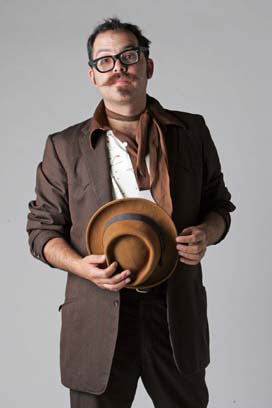
  • And finally, in San Francisco a show of a mayoral race is taking place with 12 candidates battling against incumbent Gavin Newsom. The candidates come from all walks of life including a nudist activist, a homeless taxi cab driver, the infamous Josh Wolf, and an artist named "Chicken John" Rinaldi (pictured). While Newsom enjoys incredibly high approval ratings and is almost certain to win, the Bay Area's Guardian endorsed Quintin Mecke, a young social worker involved in homeless shelters and violence prevention.

For more information about Cascadian Elections, see these informative articles:

[The Guardian] Endorsments and info about San Fran Elections

[The Stranger] Endorsments and info about Washington Elections

[NWCN] Election Coverage in Washington, Oregon, and Idaho

Click here for a wonderful FOX interview with "Chicken John" and the nudist.

Cascadian Quality of Life


Mercer Human Resources Consulting, an international advisory firm, has concocted a global ranking of the most livable cities. The results are based on 39 comparable "quality of life" issues that range from political stability to school quality and media outlets. Gathering data from 215 different cities, New York City was given an index rating of 100.0 and each city was given a score in relation to this.

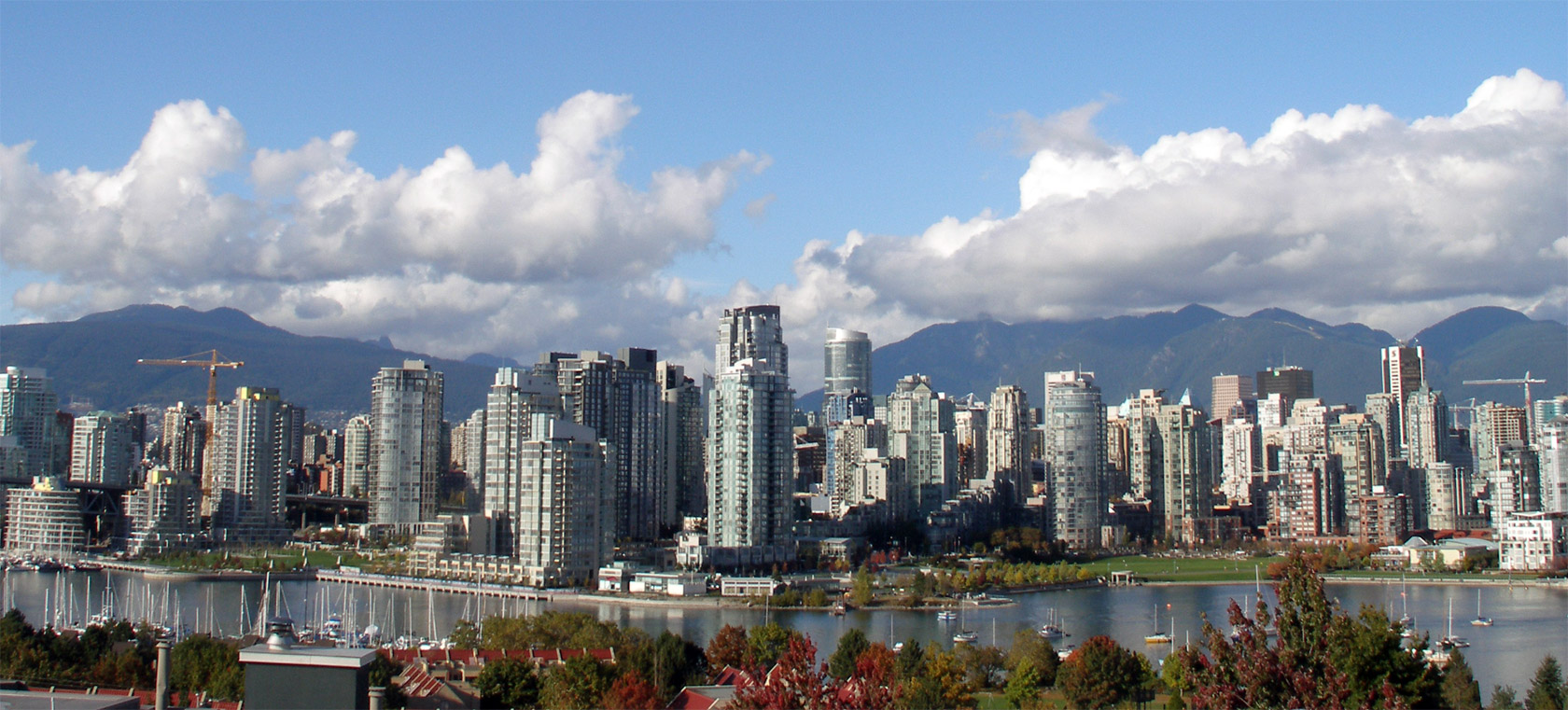
All of the ranked cities in Cascadia managed to make the top 50. The highest rated Cascadian city was Vancouver, BC (pictured), tying for 3rd with Vienna and behind (1) Zurich and (2) Geneva. The other Cascadian rankings were as follows:

San Francisco
Rank: 29
Score: 103.2

Portland
Rank: 46
Score: 100.3

Seattle
Rank: 49 (tied with Milan, Italy)
Score: 99.9

To see the full report, click here